Facilities for safe work environment in the industry
What is "dust"?
Particles or solid fibers of various substances that float or flow in the air and may enter the respiratory system during the inhalation process, the particles are formed by a natural or industrial method, handling, shaking, use or any other action in the material.
"Harmful dust" is dust that can cause lung disease or other health damage originating in the material (asbestos fibers, silica, metals, and many other substances).
What is the maximum or average level of harmful dust exposure allowed to an employee?
- The average exposure level of harmful dust in the air, in the worker's breathing area, is allowed for an 8-hour working day out of 24 hours.
- The maximum exposure level allowed of harmful dust in the air, in the worker's breathing area, is for up to 15 minutes at a time, not more than 4 times a day out of 8-hours working day with at least 60 minutes intervals from time to time.
When is an employee considered to be exposed to harmful dust?
A person exposed as a result of his partial or full-time work at least 200 hours a year for harmful dust in the air, at a level exceeding half of the maximum permissible exposure level. The exposure to toxic dust can be carried out in the process of production, processing, treatment, sawing, storage, assembly, coating, dismantling, polishing, renewing, shaking, transporting, conveying, cleaning, engraving, filling, loading, unloading or use of the material.
So what are the precautions we can take?
- Installing useful vacuuming and emission control devices close to the harmful dust source to prevent its dispersion in the production hall. And also, installing industrial ventilation systems that will allow proper ventilation conditions in all the workstations of the workers exposed to harmful dust so that the exposure permitted in the air will be lower from the values determined by law.
- Ensure that harmful dust emitted from the exhaust means is collected in closed systems and absorbed in sealed central reservoirs and tanks, in a manner that will not harm the health of the workers or the public.
How can we help you choose suction facilities that are especially suitable for you?
We have facilities designed and built specifically for these purposes.
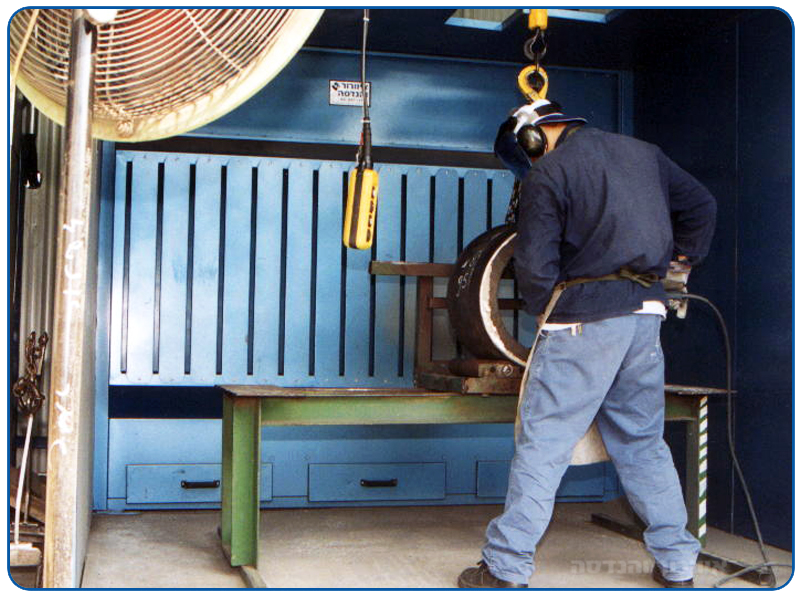
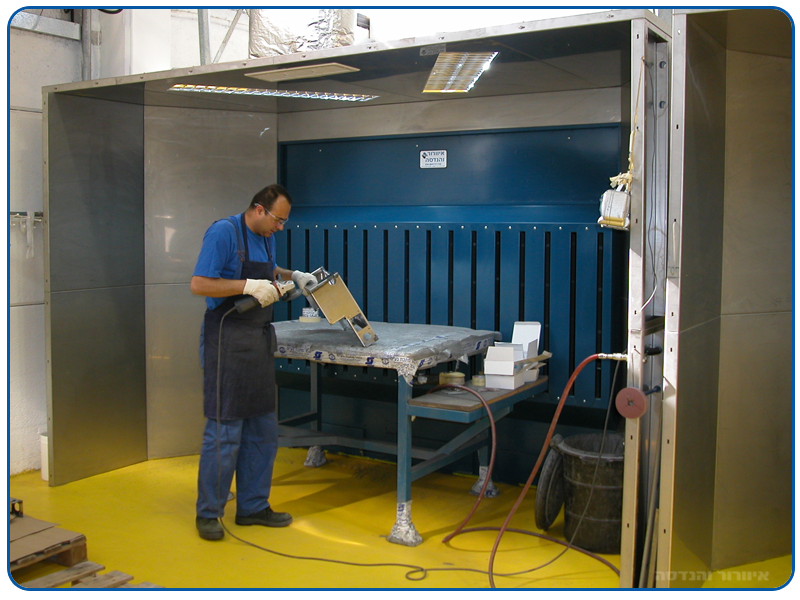
Suction and filtration wall - is a suction and filtration facility with automatic cleaning, for vacuuming from polishing chambers, grinding, electrostatic coating, packaging and material processing without interruption the production process. The filter is suitable for intensive and continuous work in the metals, raw materials, minerals, chemicals, pharmaceuticals, woodworking, and mixing industries. Filtration walls are ideal for large products while sucking air with relatively large quantities. Click here for further reading
Suction table with Internal filtration - an integration of workstation with a fume hood and automated filtration unit used for sucking and filtering from polishing, grinding, weighing, packaging, processing of complex materials, particles and vacuum extraction without process disturbance. The table is adapted for sitting or standing and allows maximum work comfort. It is suitable for intensive and continuous workflow in the metal, mineral raw materials, chemicals, pharmaceuticals, wood processing and mixing plants. Click here for further reading
Bag splitter suction workstation - is an automatic dust filter used to filter out suspended particles and dust during bag emptying of raw materials. The filter is suitable for intensive and continuous work in the food, raw materials, mineral, chemical, pharmaceutical, plastic, and mixed-beverage industries. Click here for further reading
Ventilation and Engineering plant has over 63 years of operation, together with international knowledge agreements implemented in all the company's products. We are able to provide consultation, design, and production of blowers, vacuums, and ventilation systems adapted to the unique ventilation or suction problems in your factory.





.gif)


.png)


